
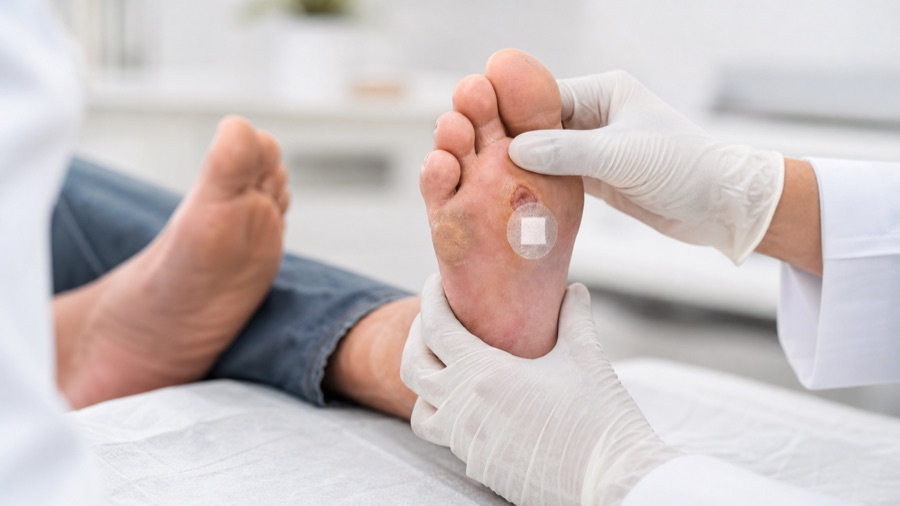
Diabetic foot ulcers often start with small signs: a red area that keeps returning, a callus in the same place, a shoe that rubs one toe, or a blister that was not felt early. Because diabetes can reduce sensation, pain is not always a reliable warning signal.
Footwear should be reassessed if you notice repeated calluses, skin color changes after wearing shoes, swelling that changes shoe fit, numbness, burning, tingling or any history of wounds. A shoe that is too narrow or has internal seams can create repeated irritation. An insole that does not offload pressure can allow the same spot to break down again.
Protective diabetic footwear is built to reduce these risks. Extra depth, smooth lining, appropriate width and custom offload insoles can make daily walking safer. Footwear is not a replacement for medical care, but it is an important part of reducing repeated pressure and friction.
At Flexi Feet, we help people with diabetic foot concerns choose custom shoes, insoles and socks based on the shape and risk of the foot. If you have an active wound, see a medical professional first. If you have healed areas or recurring pressure, footwear planning can help protect the skin going forward.
Do not wait for pain to become the signal. If the shoe is leaving marks, the foot is already telling you something.